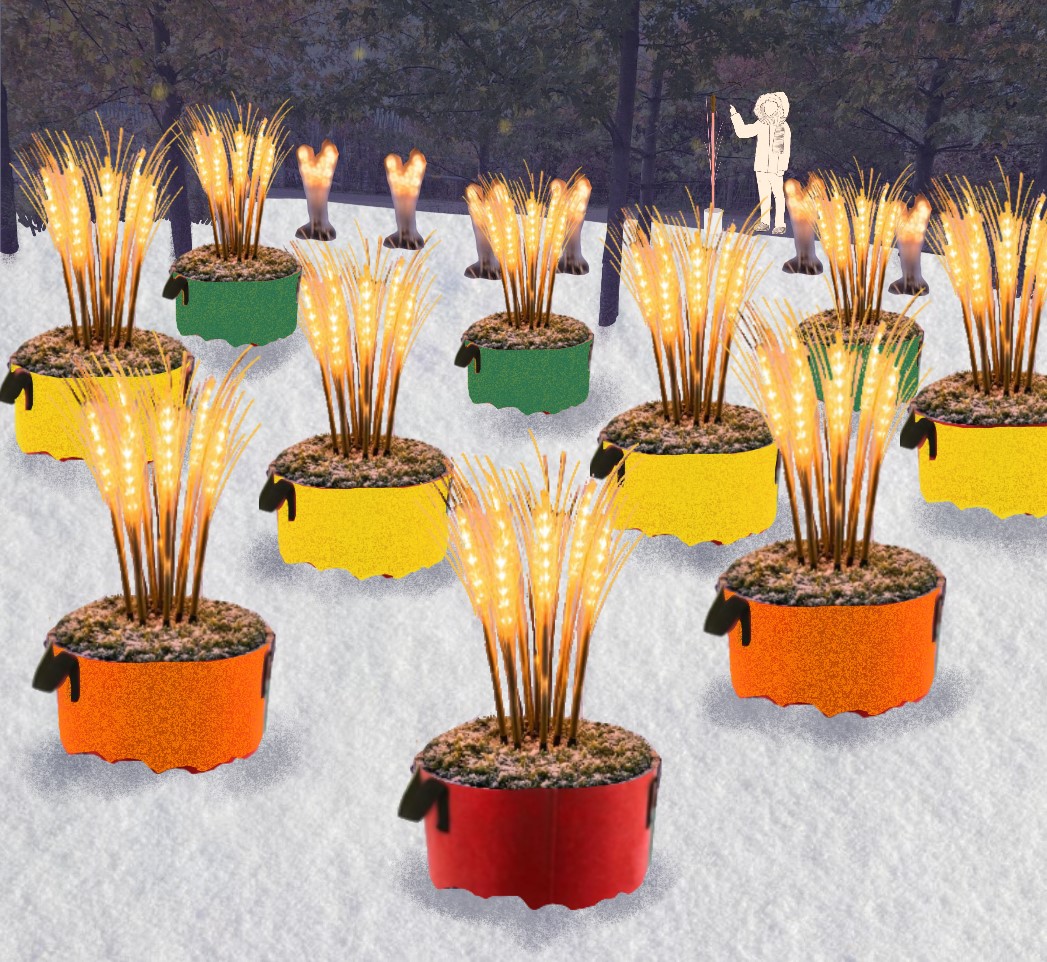
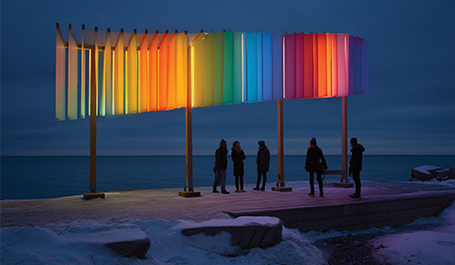
switch/grass examines the natural rhythms found in plant ecosystems and translates it into a multisensory sculpture that displays shifting patterns of light and sound. The installation features clusters of slender light-bearing ‘blades of grass’ inspired by switchgrass, a native Ontario species. Each blade contains embedded LEDs connected to custom microcontrollers. Controller reeds act as both conductors and catalysts.
When touched, a reed sends an electronic signal that triggers a wave of light to sweep across the field. This ripple disperses through the surrounding grass bundles, shifting in brightness and rhythm as it travels outward. These interactions are paired with wind-instrument sounds that change in pitch depending on where the reed is touched, linking light with sound-based motion. As visitors engage, their gestures bring the field to life, illuminating the space in pulsing rhythms of music, light and brightness. This interactive dependency reflects the ecological truth that native species, like switchgrass, rely on active human stewardship to thrive in a changing environment. As more participants interact with different reeds, their gestures create intersecting light and sound patterns: merging, diverging and constructively coming together.
By transforming human touch into waves of light, switch/grass visualizes the intertwined rhythms of ecology and human presence. Each interaction is a reminder that conservation is an act of participation, and that even the smallest gestures can ripple outward, shaping the living systems around us.
Artists
Nathan Fischer
Nathan Fischer is a PhD student researching nano material pigments to make more intense colours. Outside of his research, he loves experimenting with the latest LED lights available, whether these are WS2812Bs, SK6812s, or SD5050s. The meeting point of his love for technology, lighting, and colour is at the forefront of his artistic pursuit.
Daniel Pechersky
Daniel Pechersky believes art that engages with you physically can connect to you on a deeper level. As a result, he's been working to make pieces that can be touched and played with. Using software, he imbues the exhibit with interactivity, programming microcontrollers he calls "bugs" due to their rows of legs. The “bugs” allow the exhibit to "speak" to the observer.
Diana Tran
Diana Tran is a sculptor with a Bachelor of Fine Arts from the University of Waterloo. She uses traditional materials like porcelain clay, to more experimental ones like recycled and found objects. She sees art as a way to connect to each other, to nature, and to the stories that shape who we are.
Liam Clarke
Liam is a software engineer with a background in video game development, 3D graphics, and more. He joined the Treehouse Collective to translate his passion for building delightful interactive experiences over to the physical world.
Joe Kinsella
Joe Kinsella is a graduate of Mechatronics Engineering at the University of Waterloo (BASc 2015). At work, he develops embedded power systems for industrial applications. Outside of work, he enjoys pushing the limits of home automation, juggling, and flying drones.